


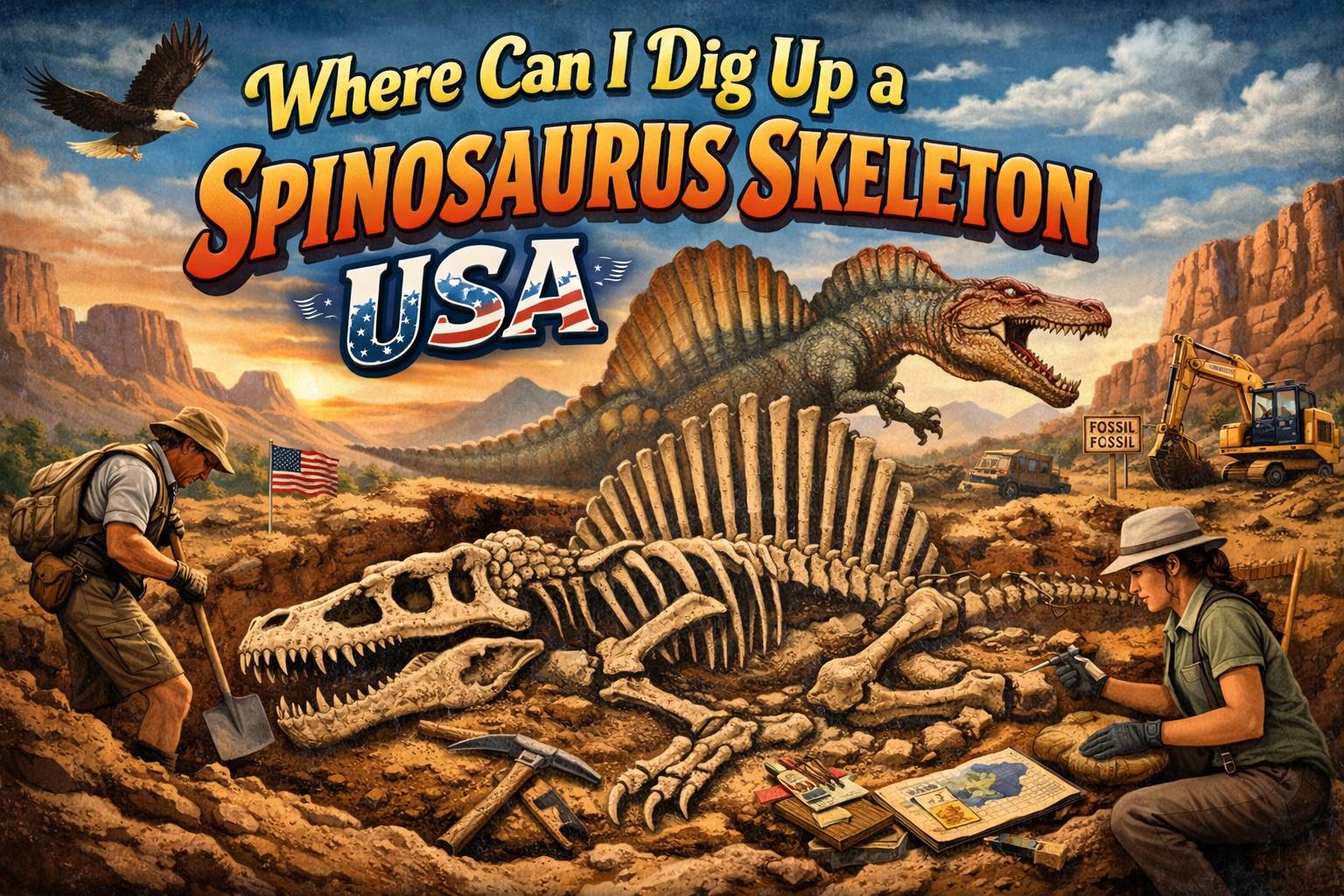
Can You Dig Up a Spinosaurus Skeleton in the USA?
If you have ever wondered Where Can I Dig Up a Spinosaurus Skeleton USA, you are not alone. Many dinosaur enthusiasts dream of discovering a massive fossil buried in the ground. However, the reality of finding a Spinosaurus skeleton in the United States is far more complicated than just grabbing a shovel and heading to a dig site. Spinosaurus fossils are extremely rare, and they are known only from North Africa. In the U.S., strict fossil laws protect dinosaur remains, making it illegal to dig up vertebrate fossils without proper permits or landowner permission.
While you cannot legally dig up a Spinosaurus skeleton in the U.S., there are exciting alternatives. From organized museum digs to public fossil sites and spectacular museum exhibits, you can still experience the thrill of working with fossils and learning about these incredible prehistoric creatures. This article explores everything you need to know about Where Can I Dig Up a Spinosaurus Skeleton USA, including legal considerations, alternative fossil opportunities, and the best places to see or participate in dinosaur discoveries.
Legal and Ethical Rules in the U.S.
Before you imagine heading out to a western badlands with a shovel, it is crucial to understand the law.
Federally Protected Fossils
On U.S. federal lands (managed by the Bureau of Land Management, National Park Service, U.S. Forest Service, etc.), collecting vertebrate fossils (including dinosaur bones) without a research permit is illegal under the Paleontological Resources Preservation Act (PRPA).
-
Only invertebrate fossils (like shells and plant fragments) can sometimes be collected casually with hand tools.
-
Dinosaur bones, including Spinosaurus bones, are off-limits unless you are part of a professional, permitted research team.
Attempting to dig up and take fossilized bones without permission can lead to heavy fines or criminal charges.
Private Land Exception
If you have the written permission of a private landowner, fossil collecting is generally legal. Laws vary by state, and land ownership rights determine what you can keep.
Why Spinosaurus Isn’t a U.S. Dinosaur
Spinosaurus lived in river systems in what is now North Africa, during the Cretaceous period. Extensive sedimentary rocks from this period in the U.S. have yielded many dinosaur fossils, but none have produced Spinosaurus remains.
That means:
-
You cannot dig up a genuine Spinosaurus skeleton in the U.S. because none are known to have existed here.
-
Even in countries where Spinosaurus fossils do occur, the material is rare and rarely complete.
Where People Actually Dig for Dinosaur Bones in the U.S.
Although not Spinosaurus, the U.S. boasts excellent dinosaur fossil localities and some offer legal opportunities for enthusiasts to participate in digs or fossil hunting.
Public Sites to Observe Fossils
While digging is not permitted, you can visit places where fossils are exposed in the rock:
-
Dinosaur National Monument (Utah/Colorado) – Features a dramatic wall with 1,500+ dinosaur bones exposed in situ.
-
Dinosaur Park (Maryland) – Offers volunteer fossil hunts alongside paleontologists in exposed Cretaceous rocks.
In these areas, you can see fossils, sometimes even touch them, but you cannot remove bones.
Paid and Organized Fossil Digs
If you want hands-on experience with digging, even if not Spinosaurus, some organizations and museums run public dig programs where, for a fee, people can work with trained teams.
Examples
-
Wyoming Dinosaur Center (Wyoming): Offers fieldwork experiences where amateur participants can help excavate real dinosaur bones and have finds registered with the museum.
-
Various commercial pay-to-dig programs on private land also exist across fossil-rich states like Montana, Wyoming, and Utah, though these usually focus on Jurassic dinosaurs and plants.
These programs are legal because they operate on private land with permits and museum oversight.
Where You Can See a Spinosaurus in the U.S.
Even though you cannot find one underground here, several museums offer visitors the chance to view Spinosaurus displays.
Notable Example
-
Field Museum of Natural History (Chicago, IL) – Home to Sobek the Spinosaurus, a 46-foot mounted skeleton cast suspended over the main hall.
This impressive exhibit is a cast assembled from fossil material discovered in Morocco and makes for a great educational experience.
Casual Fossil Hunting for Fans
If digging up an entire dinosaur isn’t practical or legal, here are alternatives.
Surface Fossil Hunting
Some riverbeds and creek beds across states like New Jersey and Alabama let enthusiasts find small fossil pieces, such as teeth, bones, or marine reptiles, without digging deep. You still should check land ownership and legality first.
Fossils and Replicas
Many hobbyists acquire Spinosaurus teeth or replica skeletons through reputable dealers. Teeth from North Africa, for example, are not uncommon in the fossil trade, though due diligence is important to ensure legality.
Summary and What You Can Actually Do
| Category | Is It Possible in the USA? | Notes |
|---|---|---|
| Dig up a Spinosaurus skeleton | No | Spinosaurus fossils are not found in the U.S., and collecting vertebrate fossils on public land requires a permit. |
| Dig for any dinosaur bones with legal permission | Limited | Only as part of sanctioned research or private land digs. |
| Join organized digs and programs | Yes | Many museums and private programs allow participants to help excavate fossils. |
| Visit fossil sites and museums | Yes | You can observe fossils and see casts and displays like the Spinosaurus at the Field Museum. |
| Collect fossils casually | Limited | Allowed only for invertebrates or with landowner permission; vertebrate fossils are protected. |
Conclusion
In conclusion, if you are asking Where Can I Dig Up a Spinosaurus Skeleton USA, it is important to understand that the chances of finding a genuine Spinosaurus in the United States are essentially zero. These dinosaurs lived exclusively in North Africa, and their fossils are extremely rare. Moreover, strict laws protect dinosaur fossils on public lands, making it illegal to dig without proper permits.
However, this does not mean your passion for paleontology has to stop. There are many opportunities to participate in organized fossil digs on private land, explore public fossil sites, and see incredible Spinosaurus exhibits in museums. By following the law and engaging with authorized programs, you can experience the excitement of discovering fossils, learning about prehistoric life, and contributing to scientific knowledge. Whether you are a hobbyist or an aspiring paleontologist, the United States offers plenty of ways to enjoy dinosaur discoveries safely and legally.
Frequently Asked Questions (FAQs)
1. Can I legally dig up dinosaur bones in the U.S.?
No, digging up vertebrate fossils on public lands without a research permit is illegal under federal law. Only invertebrate fossils or plant fossils may be collected casually, and digging on private land requires the landowner’s permission.
2. Are there any Spinosaurus fossils in the U.S.?
No, Spinosaurus fossils are only found in North Africa. The U.S. has many dinosaur fossils, but none belong to Spinosaurus.
3. How can I see a Spinosaurus skeleton in the U.S.?
You can view a Spinosaurus cast at the Field Museum of Natural History in Chicago. The mounted skeleton, known as Sobek, is one of the most impressive dinosaur exhibits in the Western Hemisphere.
4. Are there public fossil digs I can join in the U.S.?
Yes, museums and private organizations run fieldwork programs where participants can help excavate dinosaur bones. These digs are legal because they are organized on private land or under permits with museums.
5. Can I collect small fossils on my own?
Yes, small fossils like marine shells, plant fragments, or invertebrates can often be collected legally with landowner permission. Always check local laws and regulations before collecting anything.
6. What is the best alternative if I want to “dig” for a Spinosaurus?
Since you cannot find a real Spinosaurus in the U.S., your best alternatives are: participating in authorized museum digs, buying legally sourced fossil replicas, or visiting museum exhibits to learn more about this rare dinosaur.